What's the deal with the Omnitrans SbX purple line?
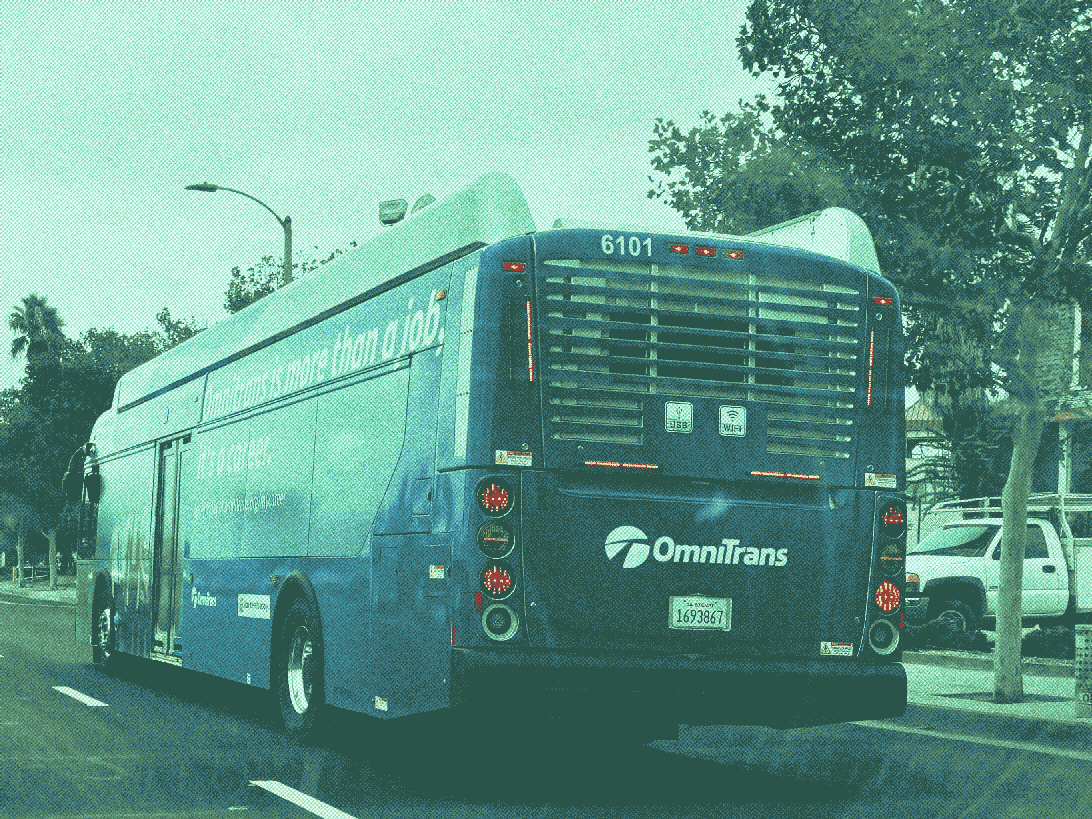
Bus fans in the inland empire have spotted some strange vehicles lately. Look at this - a 40-foot New Flyer xcelsior with a single service door on the left-hand (driver's) side of the vehicle. It also has two doors on the right-hand side like most transit buses, but that left-hand door is quite unusual for a "regular"-length bus. I haven't seen or heard of buses of this configuration pretty much anywhere. How could such a strange bus come to be? The short answer is, "it's for the purple line BRT, and 60-foot electric buses with doors on both sides were out of stock at the bus store," but the whole story is pretty interesting, i think. It's convoluted but not too long, and may be a good case study on some quirks of BRT planning and bus procurement in the US. It's also a window into an interesting, often overlooked area and its local conditions.
The stuff that's easy to armchair-plan
Bus Rapid Transit is an amusingly ill-defined term. It can encompass anything from a fully grade-separated bus highway to a street-running route that's separated from local buses only by Branding(TM). People love to argue about it. Everyone has their own idea of what "true BRT" is, and everyone is wrong. This article about the history and problems with BRT as a planning paradigm is good, though i'm not entirely convinced that there are a lot of better alternatives for bus improvement planning within the present day american political structure. We do need to use a greater variety of circulation-based bus priority measures outside of BRT corridor projects, and there are successful examples in southern California (downtown LA's various bus-only turn lanes come to mind); but I feel the local politicking needed for such paradigm shifts are untenable in many places. BRT is a buzzword describing a vague category, but it's often a politically expedient one, depending on context. I'm not yet sure whether San Bernardino county is one of those contexts. Maybe!
OmniTrans, the public transit agency for the San Bernardino valley, opened its first BRT line in 2014 after just two years of construction. The SBX green line runs north-south mostly along E street through downtown san bernardino, from a university to a hospital. It exclusively uses 60-foot articulated CNG-fueled buses from New Flyer; these buses have doors on both sides because most of the green line's stations are islands in the median of the street, and the buses right-hand run in dedicated lanes (i.e. they do not run counter to the flow of adjacent traffic). Fares are collected offboard using machines that have never worked the times i've visited, but have to be validated onboard. The line has been generally regarded as a success, although its span of service (5 AM to about 10:30 PM) leaves much to be desired, and for some reason (probably vehicle maintenance) it doesn't run at all on sundays, so you have to rely instead on the parallel local route 2. The 2 cannot use the bus lanes or median stations because it uses regular buses which only have doors on the right hand side.
Personally, i think that's a flaw that could have been mitigated in the design phase. San Diego's rapid 215 and San Francisco's 49 Van Ness both use surface-street median-running busways with side platforms, allowing them to use standard buses when needed. This allows for more resilient service in case one particular model of bus suffers mechanical issues (or when trolley wires need to be repaired or replaced, as was recently the case on the 49). In San Francisco, this also allows for overlapping inter-agency service, as Golden Gate Transit express coaches use part of the Van Ness busway alongside muni buses, providing lots of transfer opportunities for regional trips. Had the SbX green line used side platforms, the 2 could stop at the same stations; and, potentially, so could Riverside and SunLine express buses on their way to and from the San Bernardino transit center. The island platforms create a degree of separation between the green line and all other services. perhaps this is good for the green line's speed and on-time performance (can't get stuck behind another bus) but my view is that it adds excessive walking time for passengers making transfers, and subliminally reinforces the social stratification between "choice riders" and "captive riders".
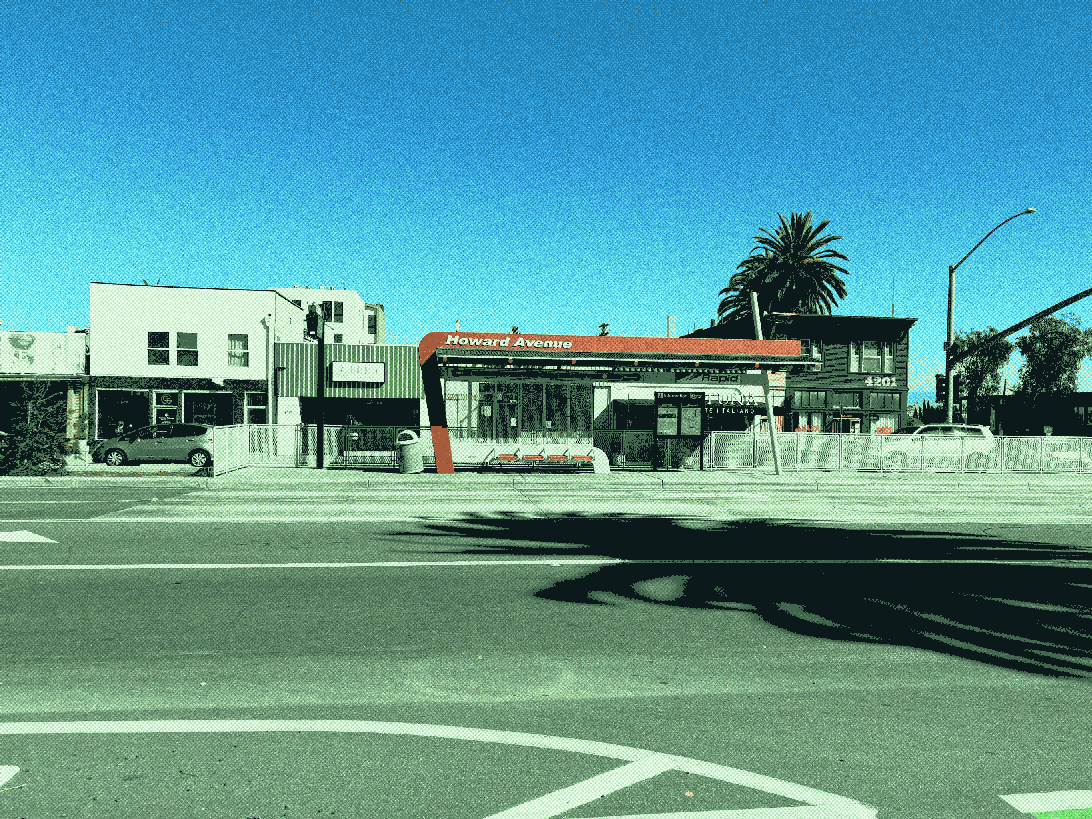
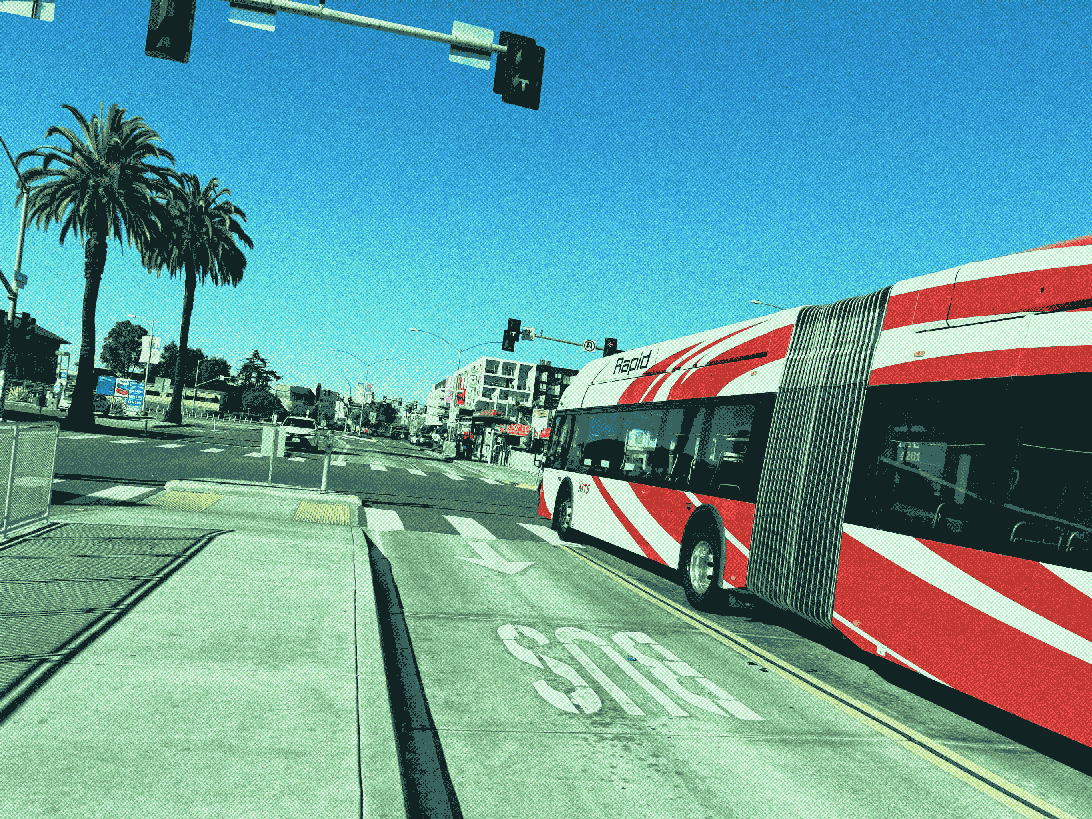
Never mind my preferences, though: median-running island platform busways have been used successfully elsewhere, such as Oakland's Tempo line and the Indianapolis BRT system. There's a good argument to be made that they allow for a smaller busway footprint overall, and can basically combine two stops into one, saving construction costs. There may also be advantages for passenger navigation, and a single platform for both directions can mean fewer lanes of traffic to cross on foot. Whatever the reason, it's what san bernardino went with for the E street busway, and decided to carry over to the purple line, at least for the segments where they could build a median busway. Thus, the purple line, just like the green line, would require dedicated, nonstandard buses with doors on both sides.
The purple line is intended to deliver a similar quality of service to the SbX green line, but on an east-west route through busy areas far west of San Bernardino, hence the project name "west valley connector." Currently, its route is served by the local bus 61. Unlike the green line, the purple line passes through five different cities. Seemingly only one of them - Ontario - wanted to build median-running bus lanes. So, while these lanes will certainly help with speed and reliability, they'll be on a pretty short portion of the route. This is an all too common shortfall of transit projects that cross multiple city limits, but I don't think it's necessarily the end of the world. Though short, these lanes make the total trip time shorter, allowing more frequent service on the whole route. And they're not the only frequency-improving trick in the project.
The 61 is roughly 24.4 miles long, while the purple line is 20.7 (give or take about half a mile between eastbound and westbound distances due to some looping). Cutting off 4 miles is an easy way to make a route more frequent: since each full trip takes less "cycle time", the same number of buses en route can divide that cycle time into a shorter headway. OmniTrans also plans to maintain the 61 as an "underlying" route somewhat like the 2, with hourly service on weekdays and more frequent service on weekends. Additionally, they plan to split the 61's eastern section from Fontana to Ontario into a separate route that will run frequently every day, as that segment won't be part of the purple line. Instead, the purple line will head north on Milliken from the Ontario mall to Rancho Cucamonga, making a short deviation to serve the Metrolink station, then continuing north to the Victoria Gardens mall where the route ends. I'm not sure if this mall will be a significant ridership generator, or if it's just a convenient place to lay over. Either way, routing through the Rancho Cucamonga Metrolink seems like a very good idea, as major transit-oriented development is planned there, and if Brightline West pans out, it'll become a major intercity rail station too.
A second phase is also planned, starting in south Fontana, heading northward on Sierra avenue and then east to west on Foothill boulevard before heading south on Haven avenue before re-joining the first phase at ONT airport. It's not quite clear whether this is intended to be operated as a branch of the same route as the first phase, or as a second route, as the environmental reports are mainly about construction rather than service planning, but that would be a reasonable guess. A two-branched line would be useful for connecting a lot of far-flung centers in the eastern parts of the project area while still running the most frequent service possible on the core of the route: Holt boulevard.
The key geographic feature of the Holt boulevard / Holt avenue corridor is its proximity to the Union pacific main line. the tracks are surrounded by light and heavy industrial land use, while the areas immediately surrounding holt are mostly retail. North of Holt is largely residential, both single- and multi-family. This means there are a lot of industrial jobs within walking distance of holt. A lot of blue collar workers can and do take the Holt bus to work - the present day 61 is one of OmniTrans's busiest routes.
It's also roughly equidistant between the parallel 10 and 60 freeways, and pretty far from the Metrolink San Bernardino line; meaning that there are few alternatives to Holt for east-west travel. The way the Union Pacific controls its tracks (words like "cruel" and "totalitarian" come to mind) means that there's no meaningful service on the nearby Metrolink Riverside line. From Ontario airport to downtown Pomona, there are few alternatives to Holt, making it an exceptionally high-impact corridor for bus speed and capacity enhancements. It makes sense that this was designated as the first phase for purple line construction.
West valley connections today
It's time for some field research: on a chilly afternoon in may, i took a round trip on the 61 - an odyssey of two hours in each direction. From the desolate Pomona North light rail station, a 20-minute ride south on the 291 bus brings you to Pomona regional transit center. attached to the least-used Amtrak station in the entire state, the transit center consists of an island platform with a dozen sawtooth bus bays. at the exit side of the bus loop, across from the island platform, there's a raised curb and two L-shaped overhead charging pantograph masts. This is the purple line's future terminal, currently surrounded by chain link fences and caution tape.
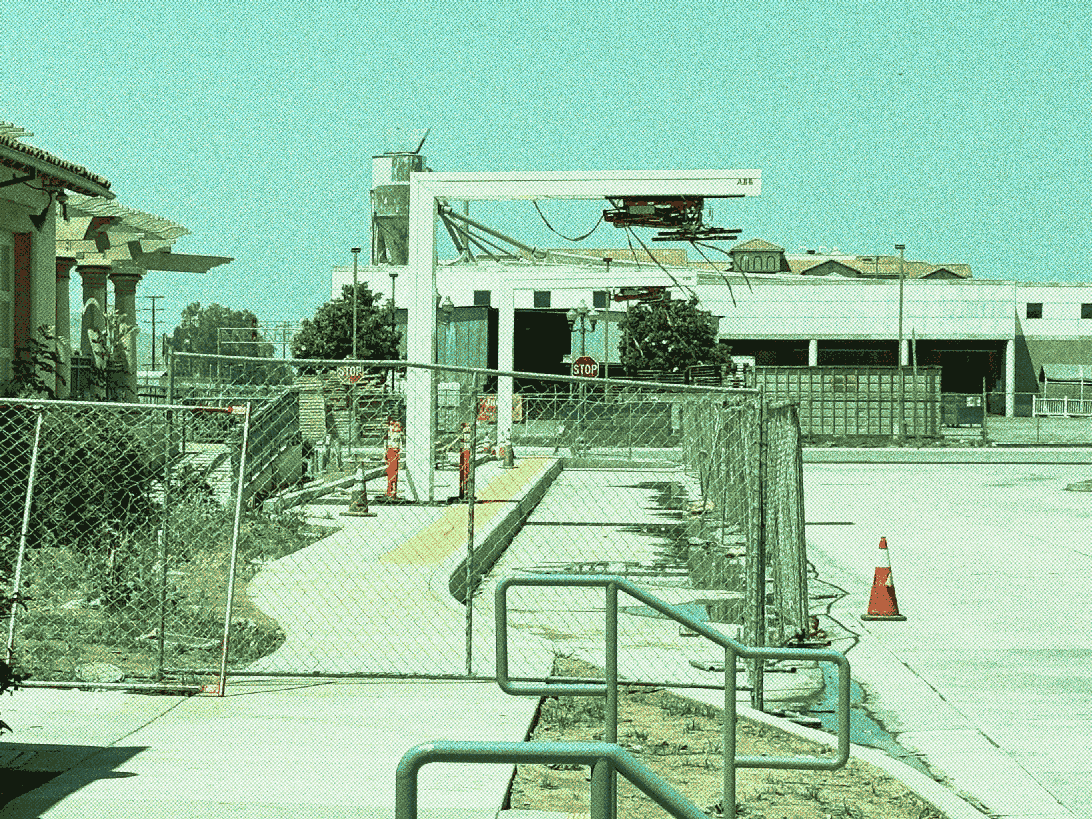
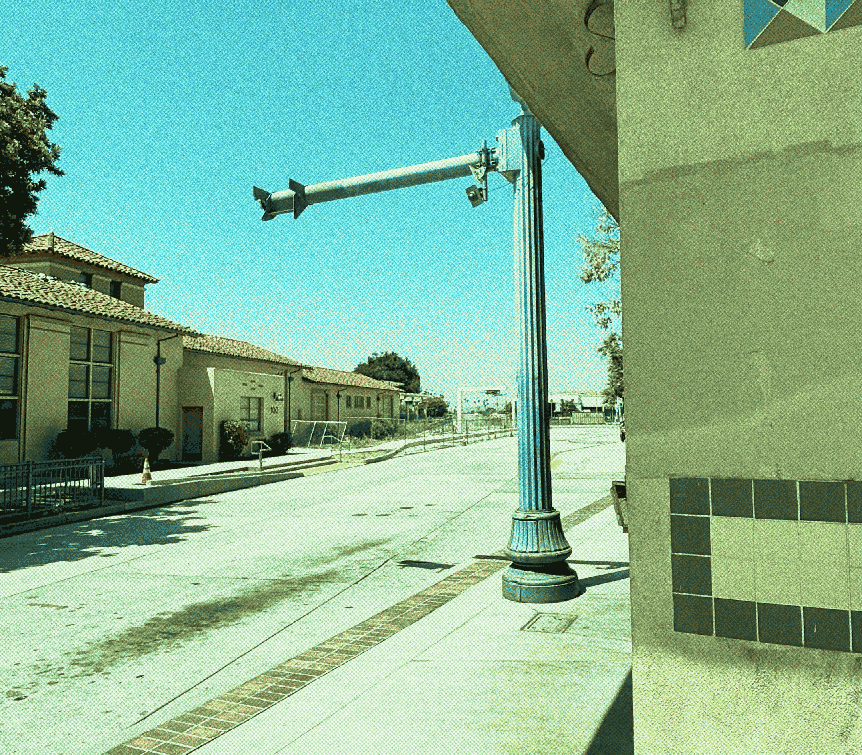
On the other side of the historic station building is the Amtrak platform, which only gets three trains per week in each direction, all in the middle of the night. Across the union pacific tracks is the metrolink riverside line platform, which gets five trains per weekday in each direction. It's no wonder this is california's least-used Amtrak station, and the Metrolink ridership can't be very high either with so few trips. The really cool looking pedestrian crossing over the tracks is permanently closed for unclear reasons, and the alternate path down to the sidewalk underpass is long and unclearly-marked. It seems unlikely that many people are transferring from train to bus here.
However, it's a happening place for inter-bus connections. Several of the Foothill transit routes running north-south and west from here run every fifteen minutes for much of the day, including the silver streak to downtown LA - a very different kind of BRT. The silver streak has basically no dedicated infrastructure, running almost entirely on the 10 freeway. it uses the El Monte busway and some off-ramp stops which pre-date Foothill transit as an agency entirely. Its on-time performance seems dubious sometimes, but it runs 24/7 on a really impressive region-spanning route. The 61 runs roughly every twenty for most of the day, and with a longer span of service than most of the foothill buses (about 4 AM to 11 PM). When i got to the transit center, passengers were already queued up waiting for the 61 to open its doors. It's the only frequent route running directly east from downtown pomona, and so an important connection for a significant and busy swath of the area. It's also the only OmniTrans route to cross the LA county line.
While i was waiting for the 61, an older gentleman told me about how he'd been to heaven three times and hell four times. In hell he'd seen geysers of flame fifteen hundred feet tall, Hitler impaled on a meat hook for eternity, OJ Simpson trapped at the bottom of a dark whirlpool. In heaven he'd seen people arrayed in all kinds of garments from different eras of all different colors, angels with gold wings (he recognized the gold because he'd been a gold miner) and his late wife. This conversation continued onto the bus ride, until he alighted after four or five stops.
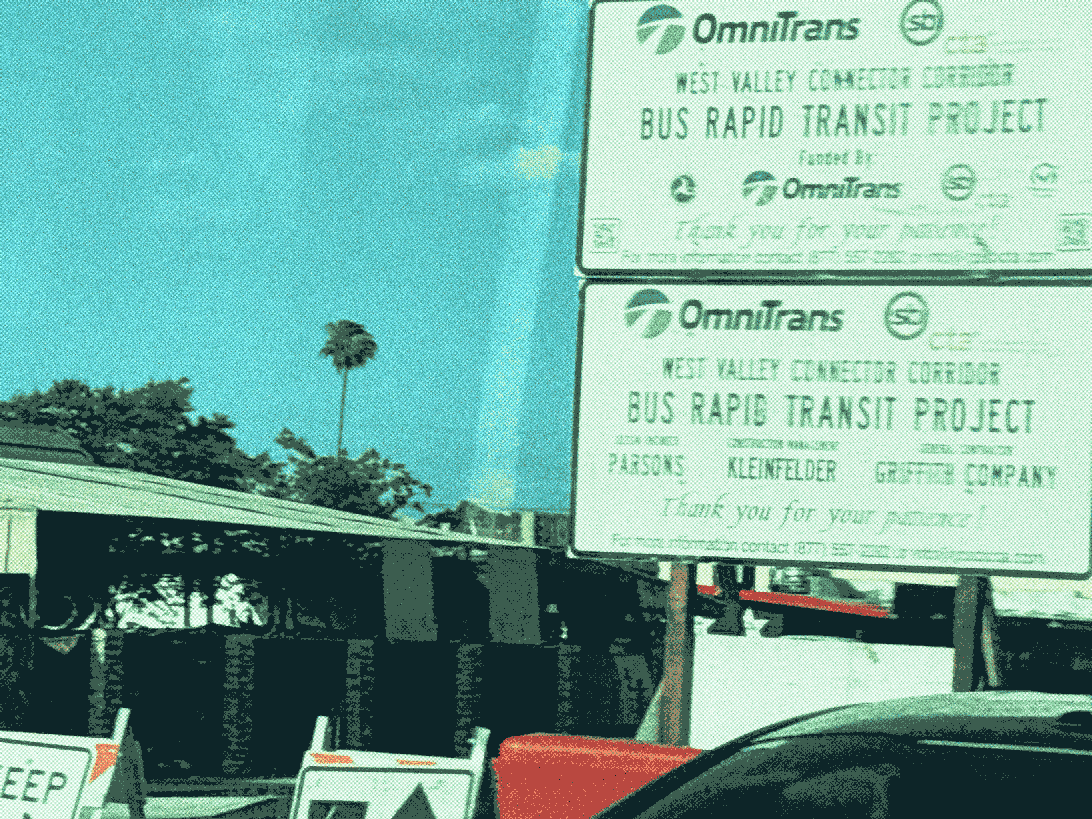
Heading eastbound, the 61 runs due east on Holt avenue, which turns into Holt boulevard at the county line. Next to a huge indoor swap meet, it crosses from Pomona in LA county to Montclair in San Bernardino county. The first half-dozen or so future station sites had barely begun construction when i visited, with sections of sidewalk replaced by temporary metal plates and the odd utility conduit sticking out of the ground. further into Montclair, though, we start to see these distinctive metal shelter canopies.
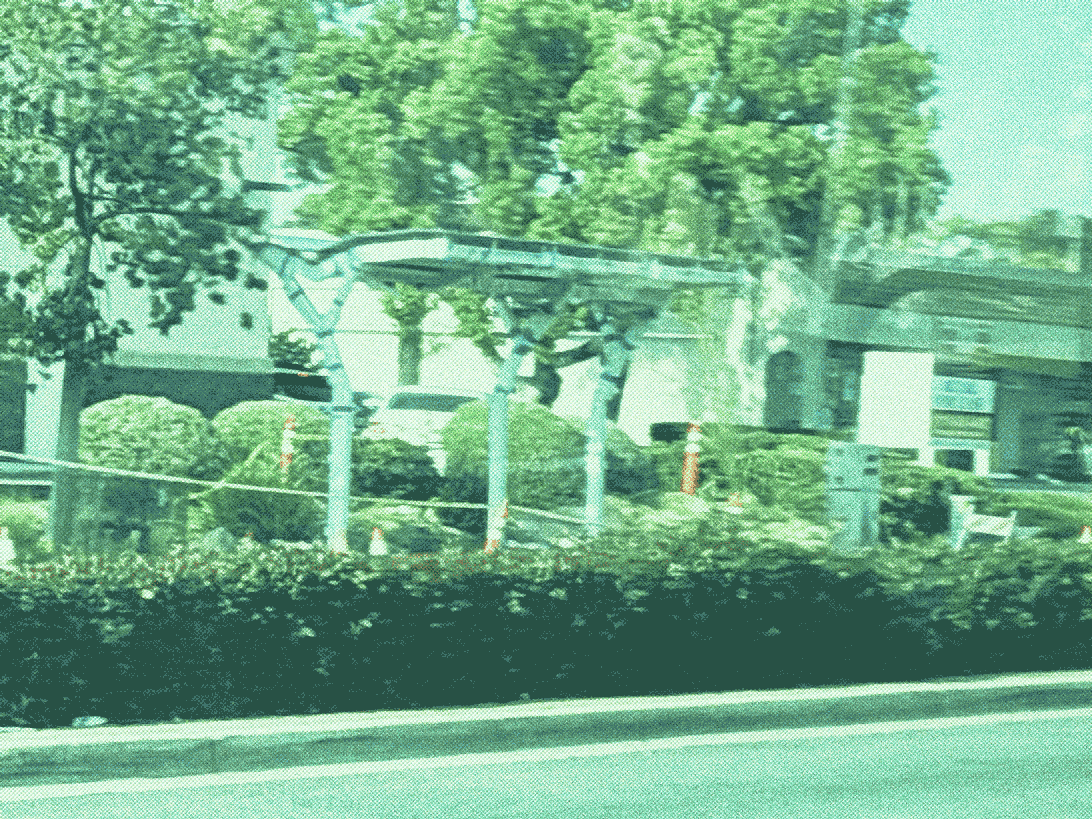
These structures show us the first two big improvements the purple line makes over the 61: stop consolidation, and relocation of stops from nearside to farside. Stop consolidation is widely seen as good for overall speed and reliability, at the cost of making some people walk further to get to the stop. In addition to stops just before intersections, the 61 has a decent amount of mid-block stops, each of which adds dwell time and conflict points. Nearside stops add a lot of opportunity for delay. At a nearside stop, the bus pulls over, picks up and drops off its passengers, then merges back into traffic and crosses the intersection. often this means the bus will Miss The Light and have to wait a whole cycle after arriving to cross the intersection. Straggling passengers getting to the stop at the last second can cause the bus to miss another cycle, compounding the delay. At a farside stop, the bus crosses the intersection before pulling over; it can depart the stop as soon as it is safe to do so.
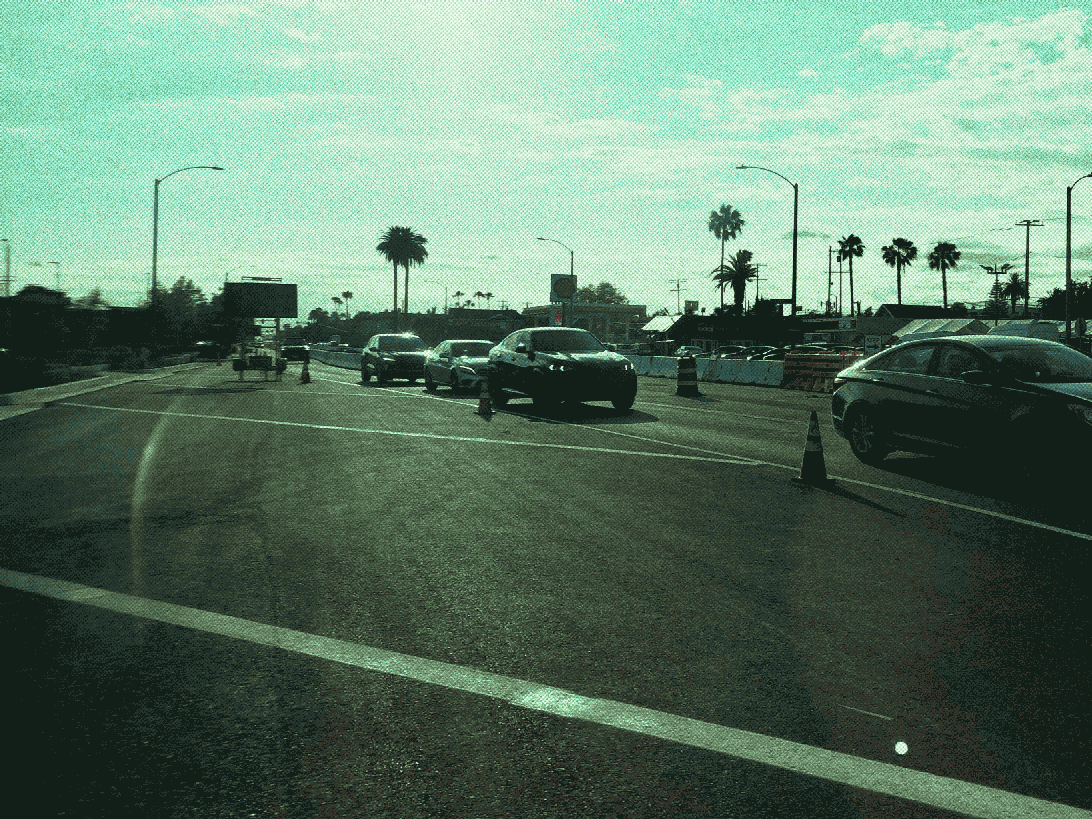
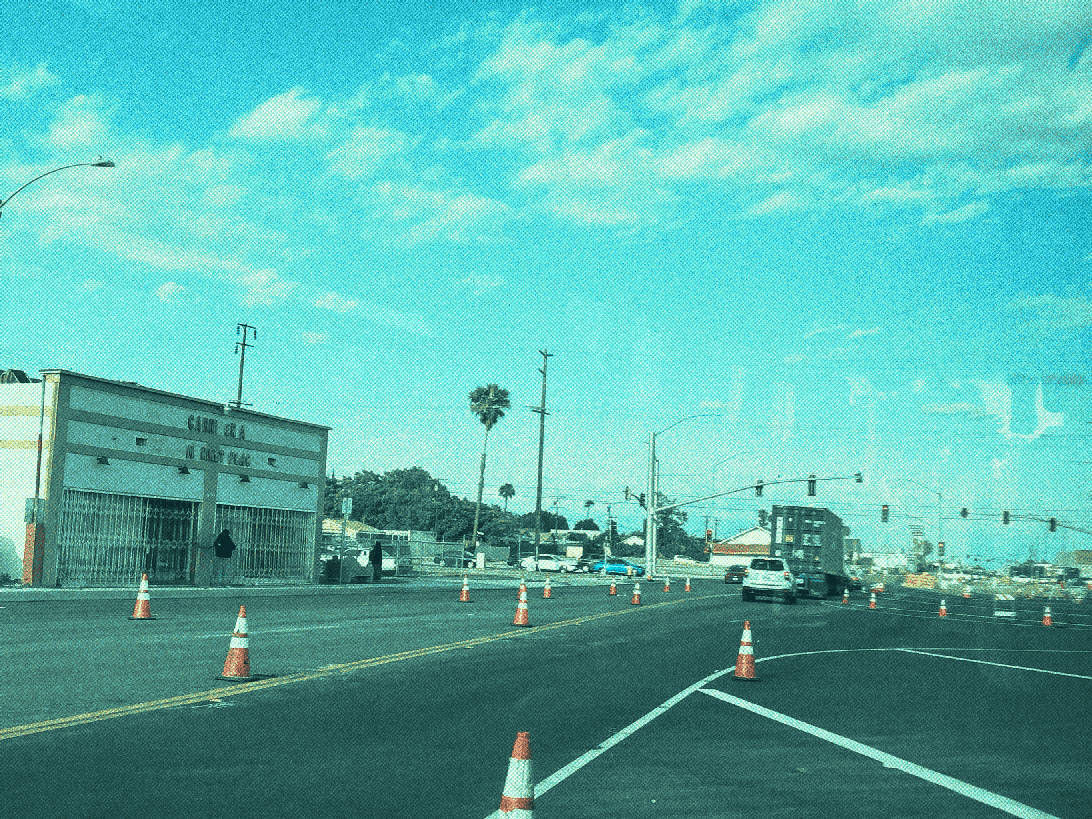
The 61 continues east through Montclair past a lot of small strip malls until, at Benson avenue, a huge construction zone appears in the median. This will be the purple line's dedicated busway segment. It's wide: the bus has to pull over across the equivalent of two or three lanes which are temporarily closed by painted stripes and flex posts. This construction zone continues through downtown Ontario, and then east towards the airport. Near the towering airport office parks, the median lanes end and the 61 makes a right turn, heading south under the UP tracks towards the terminals. ONT is a weird airport, growing fast with the potential to become one of the largest in southern California; currently though it mostly handles domestic flights. It's not convenient to either of the nearest Metrolink lines, though it operates shuttles to them and floated a foolhardy plan for a Boring Company taxi tunnel a few years ago. The 61 makes a couple stops in front of the terminals, loops back around and heads north to Inland Empire parkway. Passing a convention center, more towering office blocks and cross streets named after luxury cars, it finally reaches Milliken avenue and the immense Ontario Mills mall. This is where the current 61 and the planned purple line diverge.
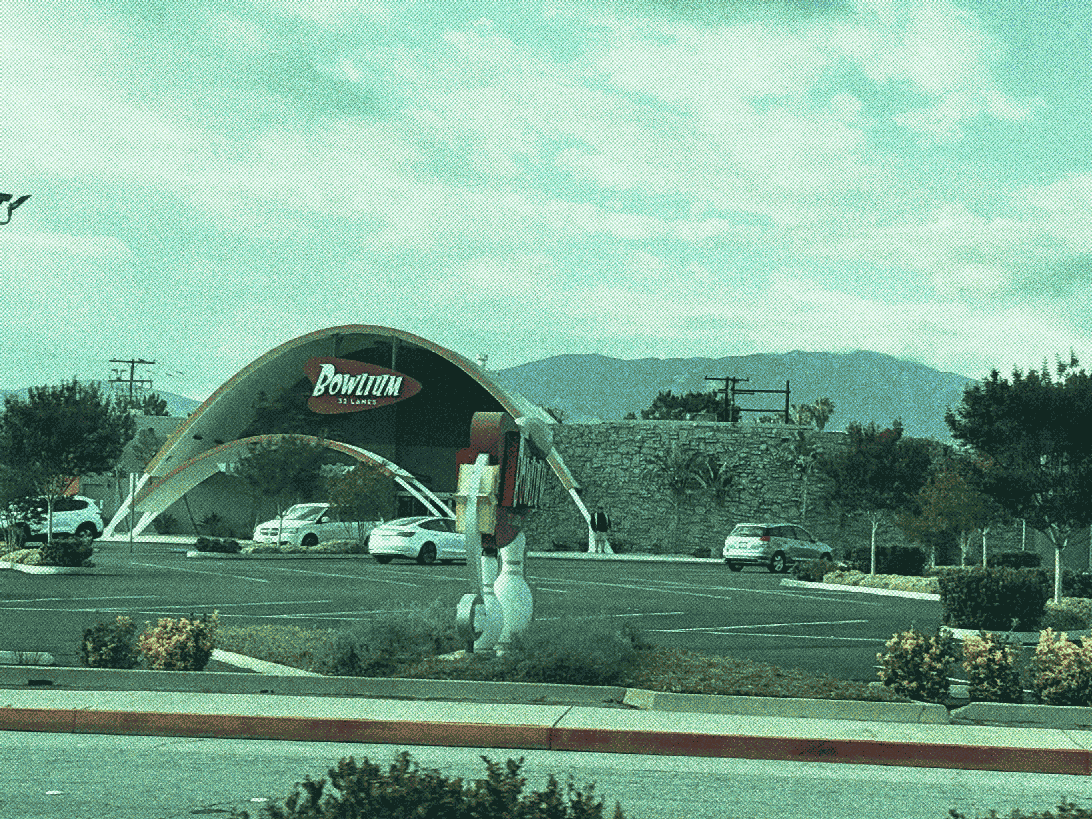
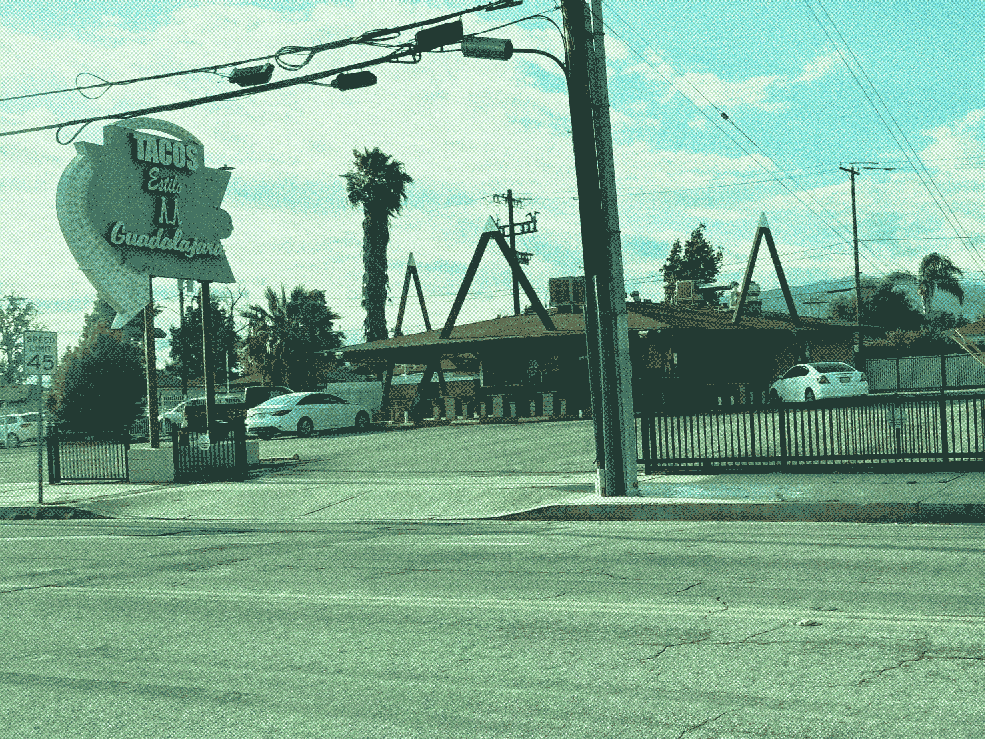
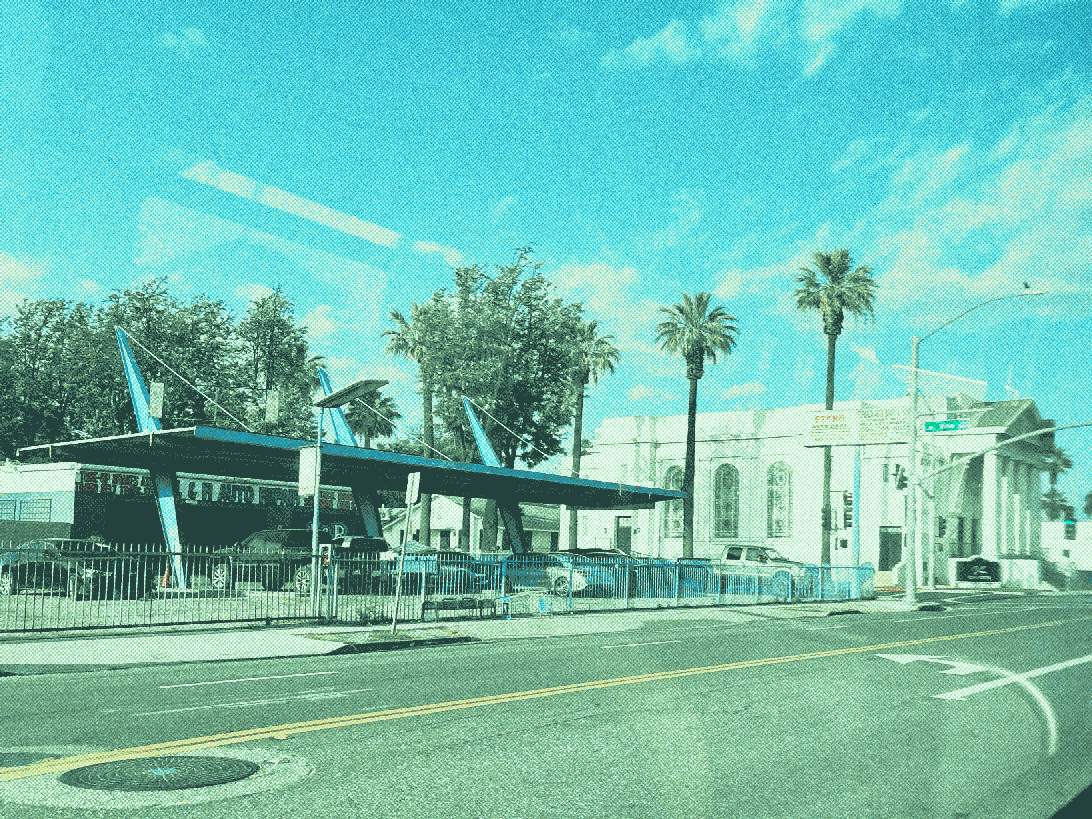
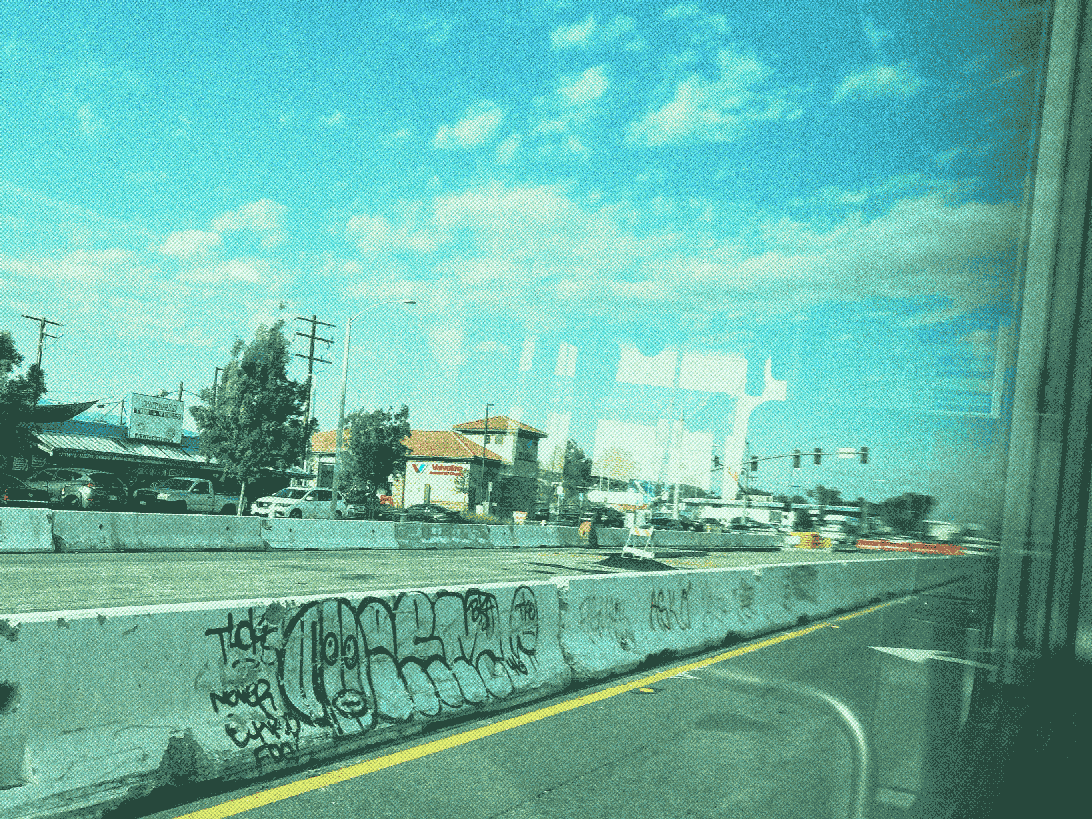
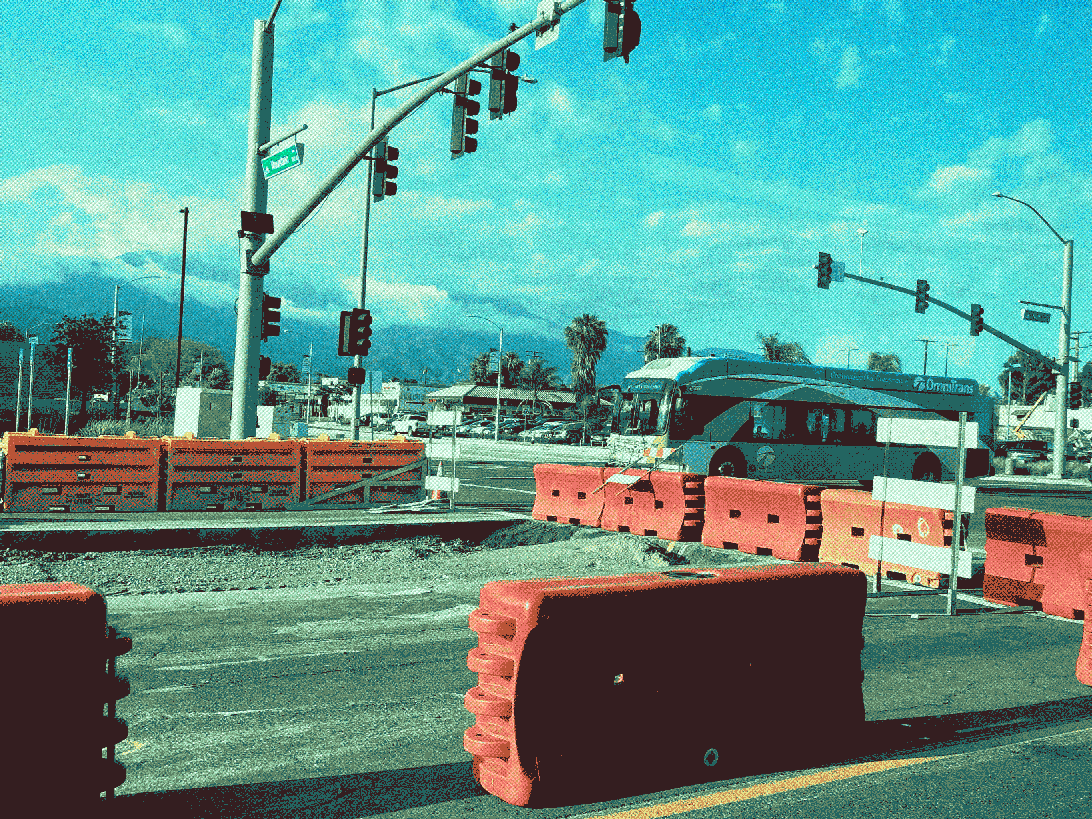
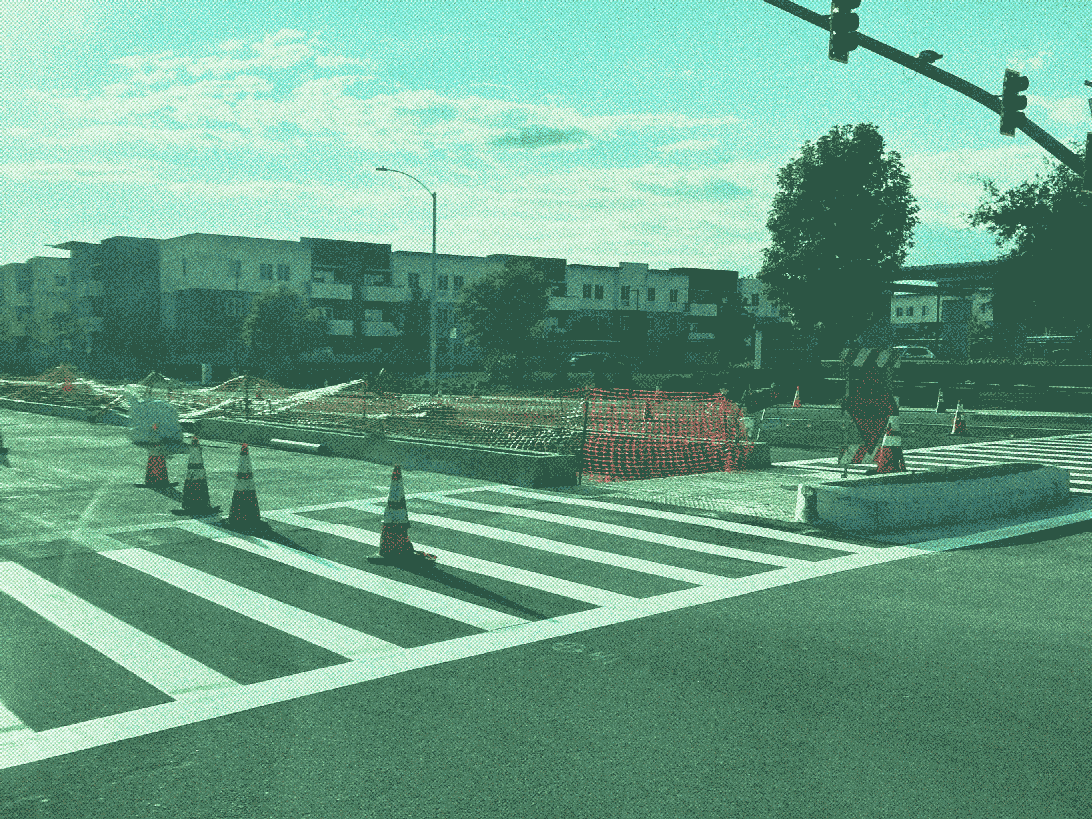

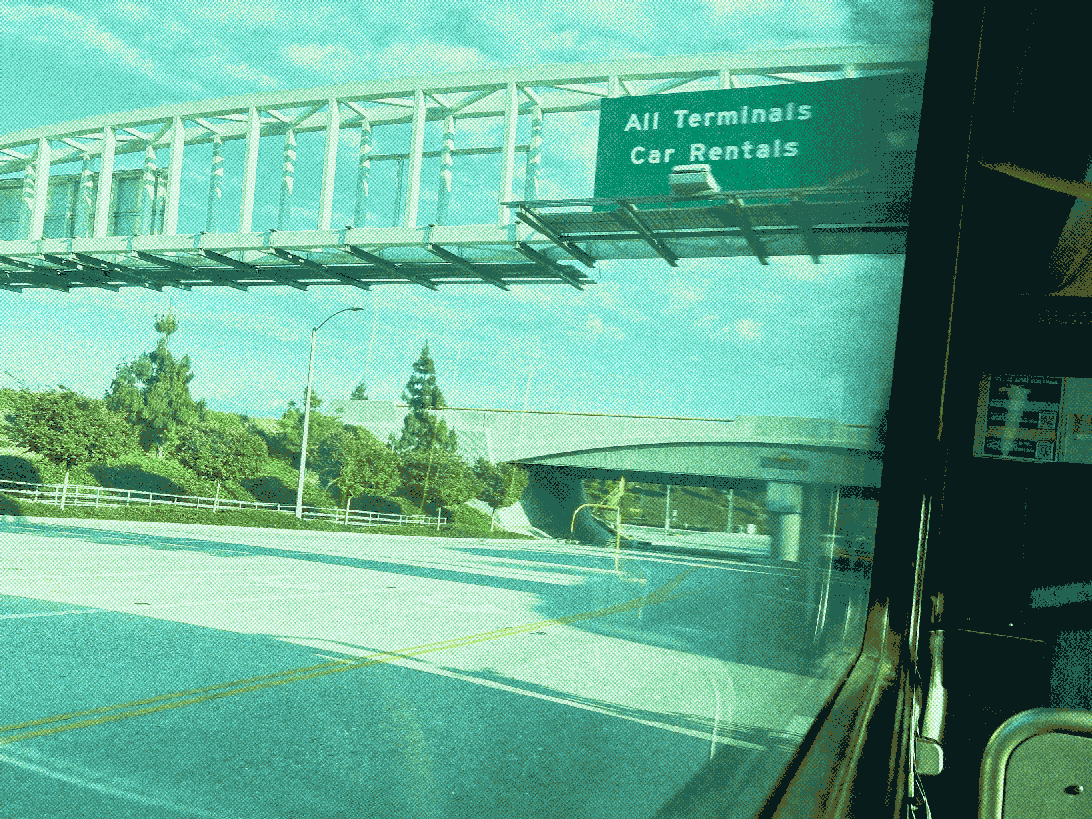
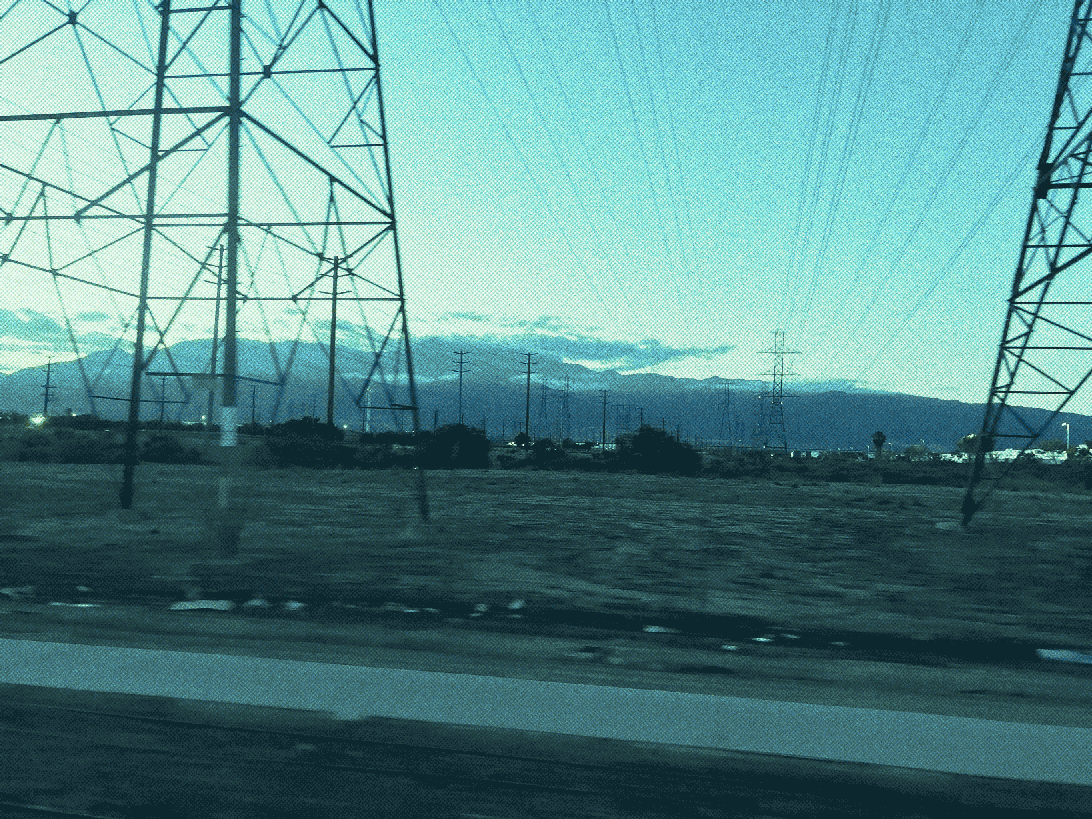
East of the Ontario mall, the 61 takes Fourth street through Rancho Cucamonga, and crosses into Fontana, where the road's name changes to San Bernardino avenue. All the while, the scenery gets sparser. Mostly it's older suburban housing with this odd quasi-rural feel, interspersed with monolithic structures. A juvenile jail surrounded by empty fields and high fences, high voltage electrical corridors running parallel with aqueduct channels, an unbelievably huge steel mill surrounded by rail yards. It's beautiful in its own way; i love how the mountains just loom overhead in every direction in this area. A little ways after the steel mill, the bus turns onto a narrow residential street and heads south before turning east again to service a transfer stop next to a large hospital in south Fontana. Then it turns north on Sierra avenue and heads to its eastern terminus at the Fontana Metrolink station, on the workhorse San Bernardino line. Several other OmniTrans buses terminate here, and a Victor Valley transit route stops here too. It's surrounded by the backs of residential and industrial areas, a bit of a long walk from the retail frontage along Sierra avenue.
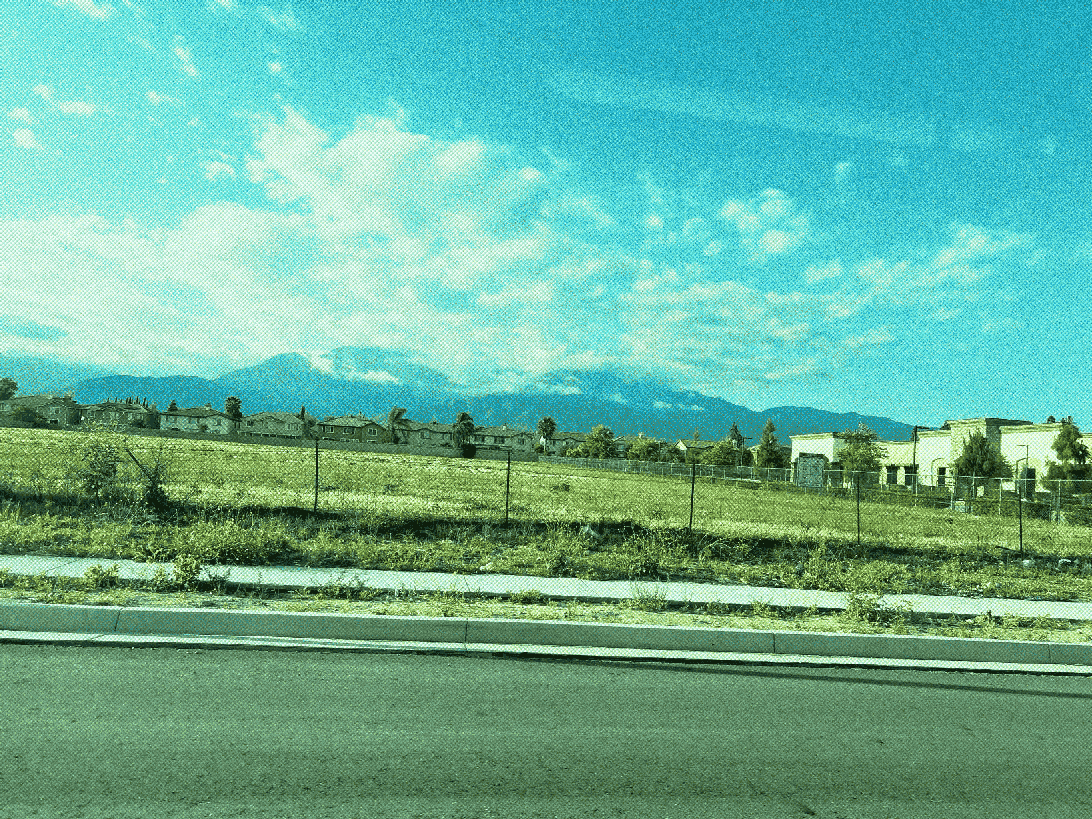
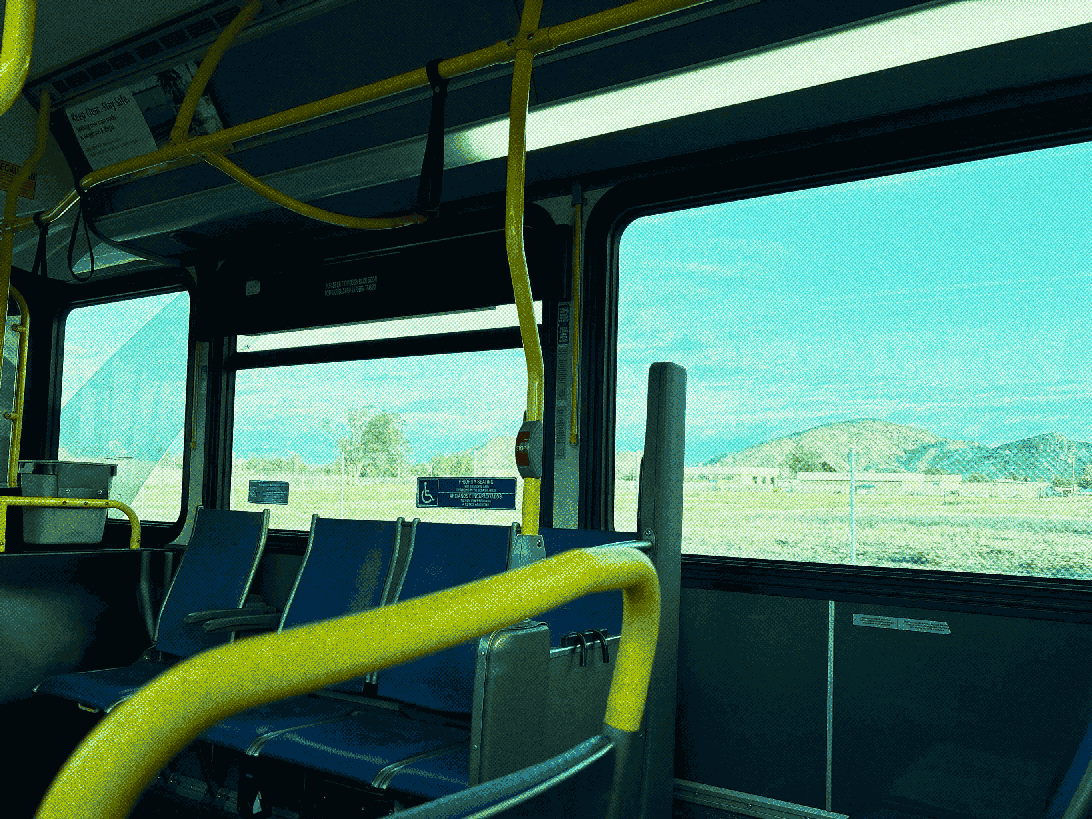
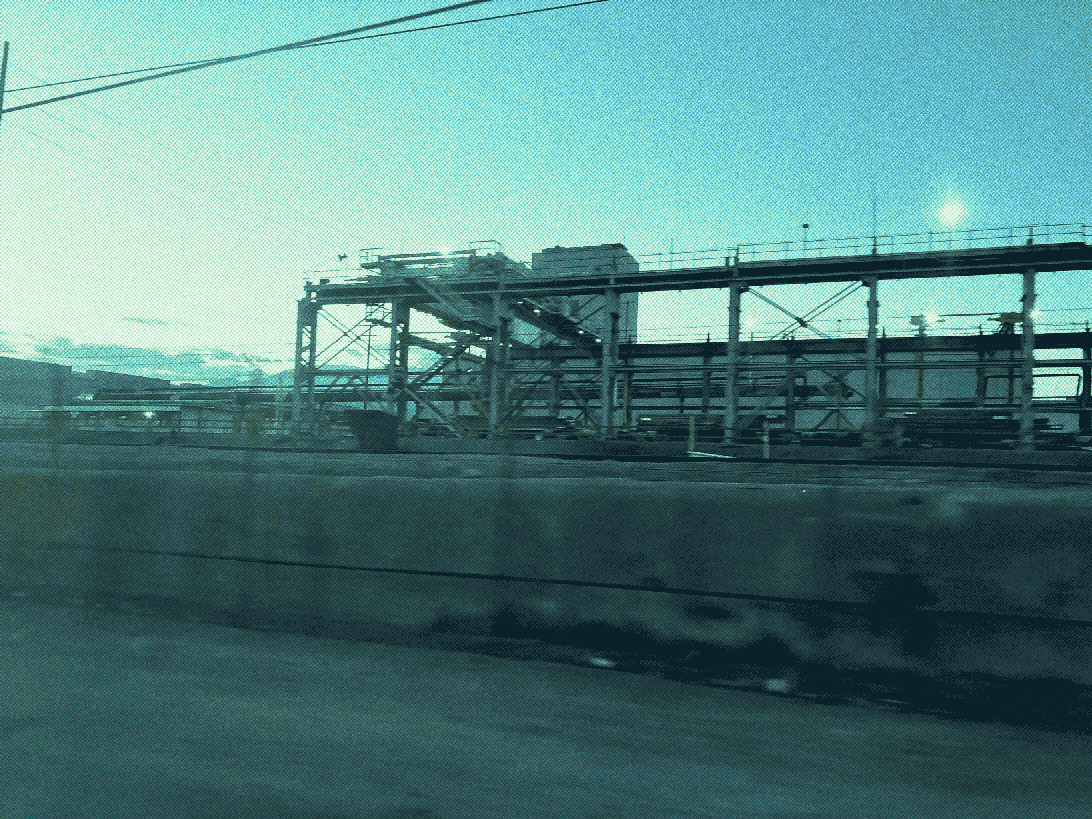
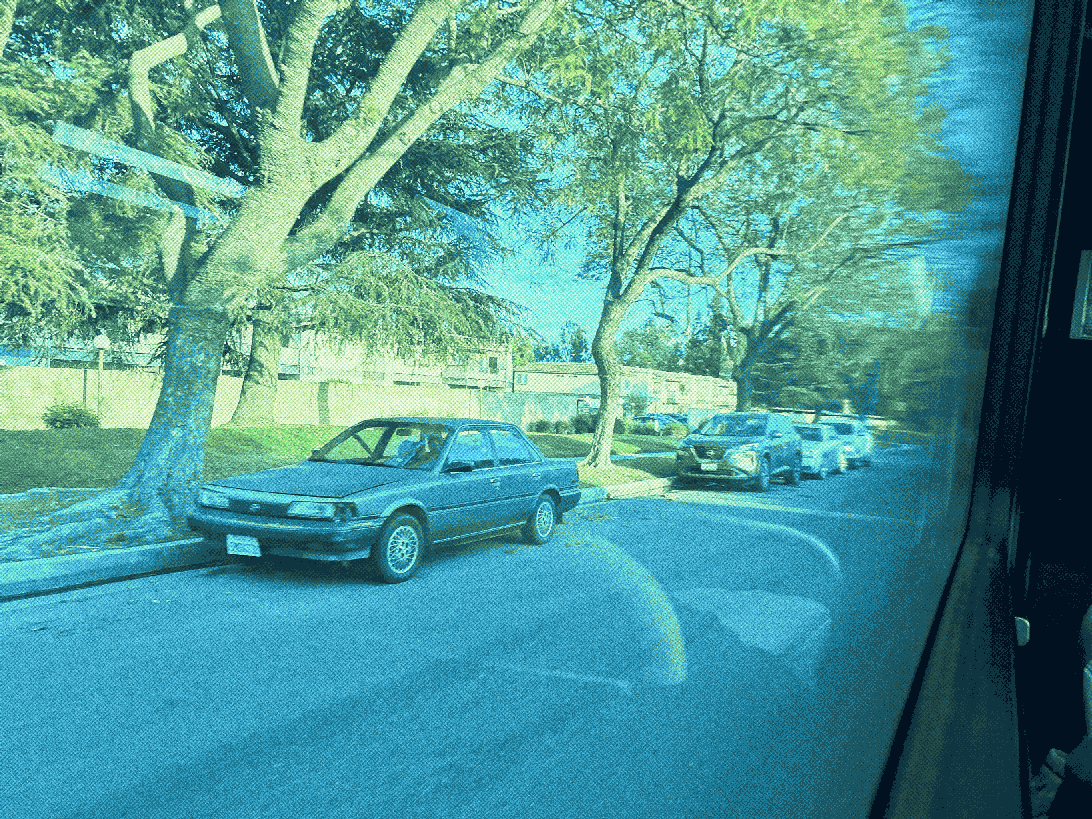
Well, that was a fun expedition, wasn't it? The 61 is a pretty cool route, and it's interesting to see these concrete bus improvements taking shape. However, we now have to return to the world of planning reports, because what we've seen in person barely begins to explain where that weird bus came from!
The stuff no one can armchair-plan for
Alright, so we have a strong geographic corridor for BRT, and an established model for how to design the stations and what kind of bus to buy. Straightforward, right? So it seemed in March of 2020, when OmniTrans published the environmental impact report for the purple line. Did anything else happen that affected the transit industry around that time? I don't remember. Probably nothing, right? Squeak, squeak, my plans are so well laid! Within the following year, OmniTrans saw a 55% reduction in ridership numbers. The agency quickly instituted a brutal set of service cuts optimistically named the ConnectForward Plan. Almost every route saw reductions in frequency as the agency sought to preserve its meager operating budget. Service resumption was planned on a year-by-year basis. In its 2023 short-range planning report, OmniTrans stated that it did not expect ridership to reach pre-pandemic levels until 2030.
These pandemic austerity measures included some value engineering for the purple line. The 2020 EIR had called for a new operations and maintenance facility in southern Ontario dedicated to the purple line's planned 60-foot CNG-fueled buses. However, the ConnectForward cuts involved a major consolidation of service from the agency's Montclair yard to its larger San Bernardino yard, meaning that there was more space available at Montclair for storage and maintenance of purple line vehicles. This was, I think, a pretty good move, though the Montclair yard is a lot smaller than the San Bernardino yard that the green line operates out of. Using an existing depot is a good way to save a lot of construction costs for this project, though. A dedicated new yard almost seemed overkill.
The other big change following the 2020 EIR was a state grant of 15 million dollars for battery-electric buses. This came from the state transportation agency (CalSTA) through the wide-reaching Transit and Intercity Rail Capital Program (TIRCP). So, they had to purchase battery-electric buses for the project, but the 2022 addendum to the EIR cites "unavailability of 60-foot-long BEBs" requiring them to use 40-foot buses instead. New Flyer Industries basically has a monopoly on articulated buses in the US, with Nova recently having exited the market and the only remaining competitor being BYD. Indianapolis and LA have seen some success using BYD articulated buses, but Omni's fleet is currently all New Flyer, so they're reluctant to de-standardize their maintenance processes and parts supplies. It would add a lot of overhead costs that may outweigh purchase savings. Effectively, whatever New Flyer says about availability goes. 60-foot battery buses weren't available, but 40-footers with doors on both sides were.
OmniTrans consulted with Parsons to see if capacity needs could be met by these unusual 40-footers, concluding that seating capacity would be sufficient for projected demand within the lifespan of the buses. The big downgrade, though, was bike storage. On the green line, bikes are wheeled into the bus via the rearmost door and secured in a dedicated bike area next to the door. The purple line will use the conventional front rack system, same as local buses. This will increase dwell times and mean fewer bikes per vehicle. Despite the capacity projections, I suspect these buses will also get crowded in everyday operation. The 61, I hear, already tends to get pretty crowded, and demand will only continue to grow.
So, that's the purple line. The route has a lot of potential, but its planning involved a lot of compromises. The short buses aren't the problem, they're just one example of the difficult, sometimes unpredictible planning environment this project exists in. The buses are basically fine, but the biggest problem with the line, in my opinion, is still the lack of weekend service. While the 61 will run frequently on weekends, it seems unreasonable to leave the new stations completely vacant for two days of the week. It's bad utilization, but it's kind of forced by the use of left-hand doors and island platforms, at least without more buses. OmniTrans's short-range planning reports describe "constrained" and "unconstrained" funding scenarios, depending on whether new funding sources can be identified. Unconstrained plans include expanding weekend service on both the green and purple SbX lines, with the reasonable expectation that that will bring in additional riders. OmniTrans knows what to do, but their resources are chronically limited, forcing weird, confusing compromises like this.
All photos in this post were taken by me, edited for size by zumphry. Check out his website, he's cool!